
Halloween is one of the biggest dress-up occasions of the year, and for many families that means a new costume every October. But most of these outfits are cheap, fast-fashion pieces made from synthetic fabrics, worn once or twice and then thrown away. The most detailed research we have comes from the UK, where a 2019 report by the Fairyland Trust and Hubbub found that Halloween costumes generate over 2,000 tonnes of plastic waste every year, the equivalent of 83 million plastic bottles. Of the Halloween clothing and costumes they surveyed, 83% were made from plastic-based fabrics. A 2017 Hubbub survey also estimated that 7 million costumes were thrown away in the UK in a single year, and that two in five were worn only once.
The US picture looks similar. According to Waste Managed, businesses and consumers there throw away an estimated 5.4 million kilograms of textile waste in Halloween costumes. And the spending keeps growing: the National Retail Federation reports that costumes are the biggest Halloween purchase category, with US adults spending around $1.5 billion on them in 2025, and around $1.2 billion more spent on children’s costumes.
As an artisan maker, I’ve always hoped that what I do pushes back against this trend, and if you’re reading this, you probably think along the same lines. But budgets are tight, and the temptation to dress your child in the latest trend isn’t always easy to resist.
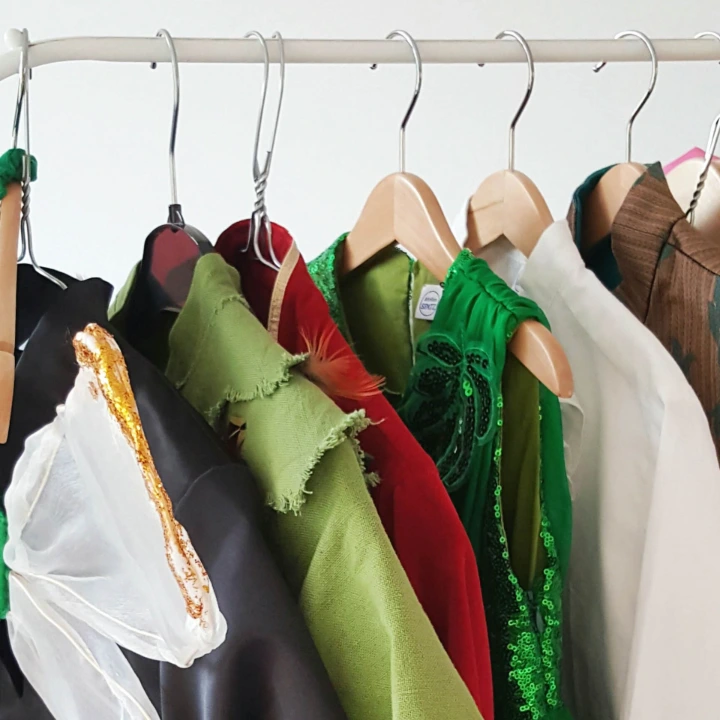
So what can be done?
Here are four ways to make your Halloween costuming more sustainable.
Your choices start before Halloween, when you decide which costume to buy. Here are four ways to make that choice more sustainable.
Check the fabric content. What is the costume made of? If it’s all polyester, it’s essentially plastic. Look for natural fibres such as cotton, silk, wool or linen, or plant-based alternatives such as Tencel, which break down far more readily.
Buy something well designed. A well-designed costume lasts longer than one season, even on a growing child. Can the cuffs be turned up? Does the waistcoat adjust at the back? Good design also lets a costume play different characters: a pirate at Halloween can be a prince at Carnival.
Buy less. I know I shouldn’t say this, given that I sell costumes, but I’m a firm believer that less consumption creates less waste. Choose something of high quality and make it last.
Pass it along. A well-made costume is like any other well-made garment: it lasts, and it can be handed on. I grew up with a chest of costumes passed down from my grandparents, and my own children now wear them. If you don’t have extended family, consider selling it second-hand or donating it to a local drama group or school.
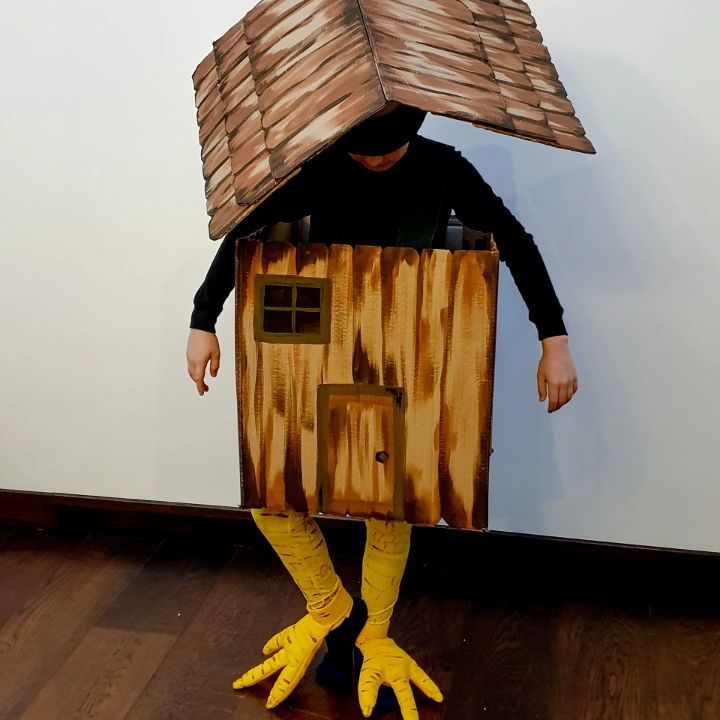
And if you’d rather make your own? Homemade costumes can be some of the most memorable. A cardboard box becomes a robot, a knight’s armour or a castle, and a few paint pots and some imagination do the rest. Raid your wardrobe too: an old white sheet makes a ghost, a worn-out shirt and a scarf make a pirate, and a few charity-shop finds can be upcycled into something one of a kind. Making it together is half the fun, and nothing goes to landfill.
With all this in mind, I wish you a wonderful Halloween!
Want to read more?
- The Independent: Halloween costume waste
- The Fairyland Trust and Hubbub: Halloween Plastics, Clothing and Costumes Report 2019
- Waste Managed: Halloween waste research
- Greenpeace: Tackling plastic pollution with trash art